Some health pivots begin with a diagnosis.
Others begin with a moment of brutal honesty.
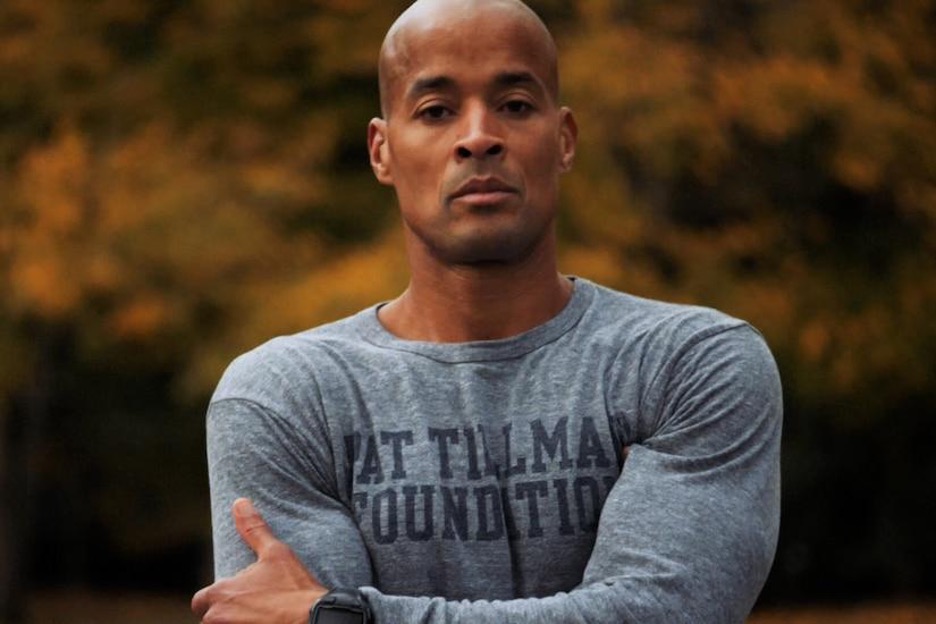

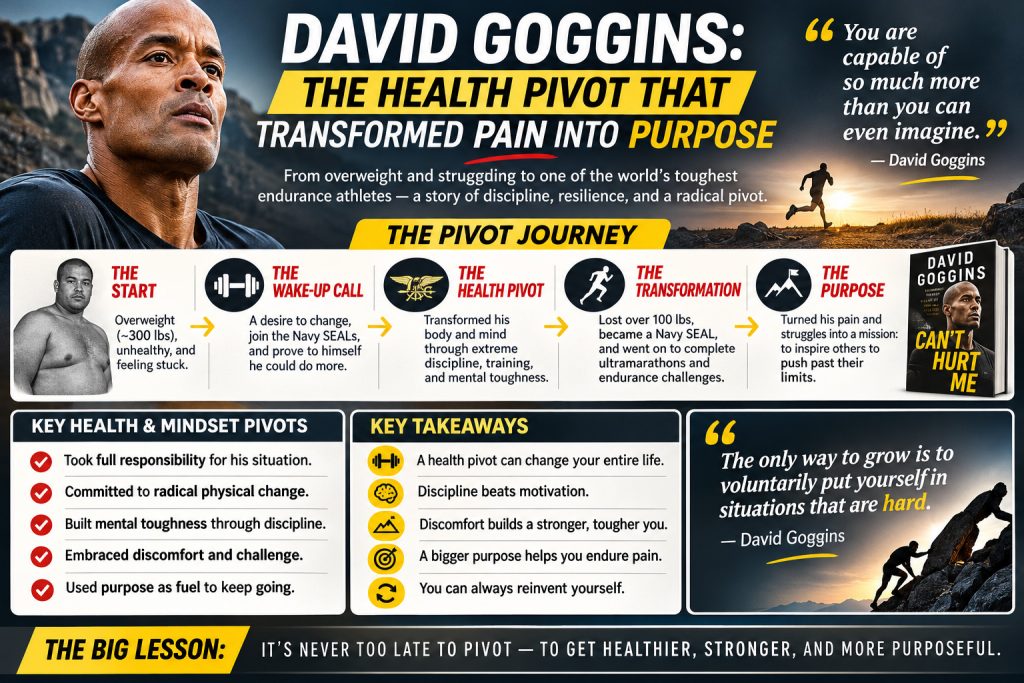
The story of David Goggins is one of the most powerful examples of physical, emotional, and mental reinvention in modern culture.
Today, Goggins is known as:
- an ultramarathon runner
- former Navy SEAL
- endurance athlete
- motivational speaker
- author
- symbol of extreme discipline and resilience
But before becoming internationally recognized for mental toughness, his life looked completely different.
At one point, Goggins was:
- overweight
- unhealthy
- emotionally lost
- working a job he disliked
- struggling with self-worth
- trapped in destructive habits
His transformation did not begin with motivation.
It began with confronting a painful truth:
the life he was living no longer matched the person he wanted to become.
His story reflects one of the central ideas in Permission to Pivot by Tom Ferrara:
sometimes the most important pivot is deciding you are no longer willing to stay emotionally, mentally, or physically disconnected from your own potential.
The Breaking Point
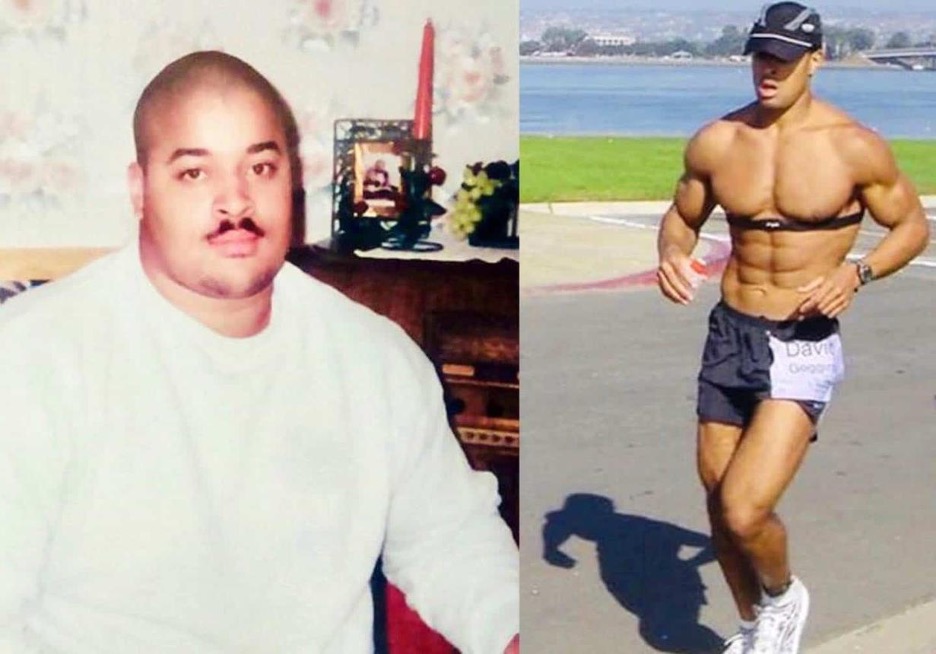
Before his transformation, David Goggins worked spraying for pests and weighed nearly 300 pounds.
He has spoken openly about:
- unhealthy eating
- emotional pain
- lack of direction
- low confidence
- feeling trapped inside his own life
This is important because many health pivots do not begin with inspiration.
They begin with discomfort becoming impossible to ignore.
People often reach moments where they realize:
- their energy is disappearing
- their habits are damaging them
- their body no longer feels healthy
- stress is consuming them
- emotional avoidance is shaping daily life
These moments are emotionally difficult because they force honesty.
The Difference Between Temporary Struggle and Long-Term Misalignment
One of the strongest ideas explored in Permission to Pivot by Tom Ferrara is learning to distinguish between:
- temporary discomfort
and - deeper misalignment
This applies powerfully to health.
Not every difficult season means life is broken.
Sometimes:
- stress is temporary
- routines are disrupted
- recovery is needed
- discipline simply slipped
But other times, people quietly realize:
“I am no longer living in alignment with who I want to become.”
That realization often becomes the beginning of a health pivot.
For Goggins, the disconnect became impossible to ignore.
The Pivot Into Discipline
One of the defining moments in Goggins’ story came when he decided to pursue becoming a Navy SEAL.
At the time, this goal looked almost impossible considering:
- his physical condition
- his weight
- his background
- his mental state
But health pivots often begin before a person feels fully capable.
That matters.
Many people wait for:
- confidence
- certainty
- motivation
- ideal timing
before making meaningful changes.
But pivots rarely begin that way.
They usually begin with:
- a decision
- a moment of honesty
- willingness to endure discomfort
- refusal to continue avoiding reality
Goggins dramatically changed his lifestyle, losing enormous weight in a short period while preparing for military training.
Health Pivots Are Often Identity Pivots
One reason health transformations are so emotionally difficult is because they are rarely just physical.
They challenge identity.
People begin asking:
- Who am I becoming?
- Why have I been avoiding change?
- What habits are controlling me?
- What pain am I numbing?
- What version of myself have I accepted?
These are deeply uncomfortable questions.
But health pivots often require confronting them honestly.
This is one reason superficial motivation rarely creates lasting transformation.
Lasting pivots usually involve identity change, not just behavior change.
The Difference Between Punishment and Purpose
One of the most misunderstood aspects of health pivots is the belief that transformation should come from self-hatred.
But sustainable change works differently.
Healthy pivots are not about punishing yourself endlessly.
They are about reconnecting with:
- purpose
- discipline
- self-respect
- possibility
- alignment
- long-term well-being
Goggins became famous for extreme discipline, but underneath it was something deeper:
he no longer wanted to remain trapped inside a version of himself that felt disconnected from his potential.
Pain as a Teacher
One reason Goggins’ story resonates with so many people is because he openly discusses suffering.
Modern culture often encourages:
- comfort
- distraction
- avoidance
- instant gratification
But meaningful pivots often require discomfort.
Not destructive suffering.
Intentional discomfort.
Growth frequently involves:
- consistency
- delayed gratification
- emotional honesty
- physical challenge
- confronting fear
- breaking old patterns
This directly connects to Permission to Pivot by Tom Ferrara, which emphasizes that not all pain means something is wrong.
Sometimes discomfort is part of becoming stronger, healthier, and more aligned.
The Danger of Waiting for Motivation
One of the most important lessons in Goggins’ story is that motivation is unreliable.
Many people delay health pivots because they are waiting to:
- feel inspired
- feel ready
- feel confident
- feel emotionally certain
But transformation usually happens through action before emotional certainty arrives.
That is critical.
Small repeated actions eventually reshape:
- confidence
- identity
- discipline
- emotional resilience
Reinvention Beyond Fitness
Over time, Goggins’ health pivot evolved into something much larger.
It expanded into:
- mental toughness
- emotional resilience
- leadership
- endurance sports
- public speaking
- writing
- helping others confront limitation
This is another major truth about pivots:
changing one area of life often transforms many others.
A health pivot can influence:
- confidence
- relationships
- career performance
- emotional stability
- self-worth
- overall direction
Lessons People Can Learn From David Goggins
- Honesty Matters
Transformation often begins with brutally honest self-reflection.
- Motivation Is Unreliable
Consistent action matters more than temporary inspiration.
- Health Pivots Are Emotional
Physical change often requires identity change.
- Discomfort Is Not Always Bad
Some discomfort is necessary for growth and alignment.
- Small Decisions Compound
Major transformations usually begin with repeated daily choices.
The “What If?” Question
Almost every health pivot eventually begins with:
“What if?”
What if I stopped avoiding this?
What if I became disciplined again?
What if my current habits are not my final identity?
What if my health affects every other part of my life?
What if I am capable of more than I believe?
Fear usually follows immediately afterward.
Fear of:
- failure
- inconsistency
- embarrassment
- starting and quitting again
- discomfort
- change
But clarity rarely comes from continued avoidance.
Permission to Pivot
Many people already know when something feels physically or emotionally disconnected.
The harder part is deciding:
- whether the discomfort is temporary
- whether fear is creating excuses
- whether discipline is missing
- or whether a deeper health pivot is truly needed
That is why Permission to Pivot by Tom Ferrara resonates far beyond careers alone.
Its themes apply deeply to health because health pivots often involve:
- identity
- discipline
- emotional honesty
- resilience
- discomfort
- reinvention
The book encourages people to ask:
- Am I living in alignment with the person I want to become?
- What habits are shaping my future?
- Am I avoiding discomfort or avoiding truth?
- What version of myself am I tired of accepting?
- What if change is still possible?
David Goggins’ story reminds us that some of the most meaningful pivots begin with the painful realization that you can no longer continue living disconnected from your own potential.
And sometimes the most powerful transformation starts the moment you stop negotiating with the habits that are holding you back.
Recent Posts