Some health pivots begin with fear.
Others begin with exhaustion from trying to become who everyone else expects you to be.



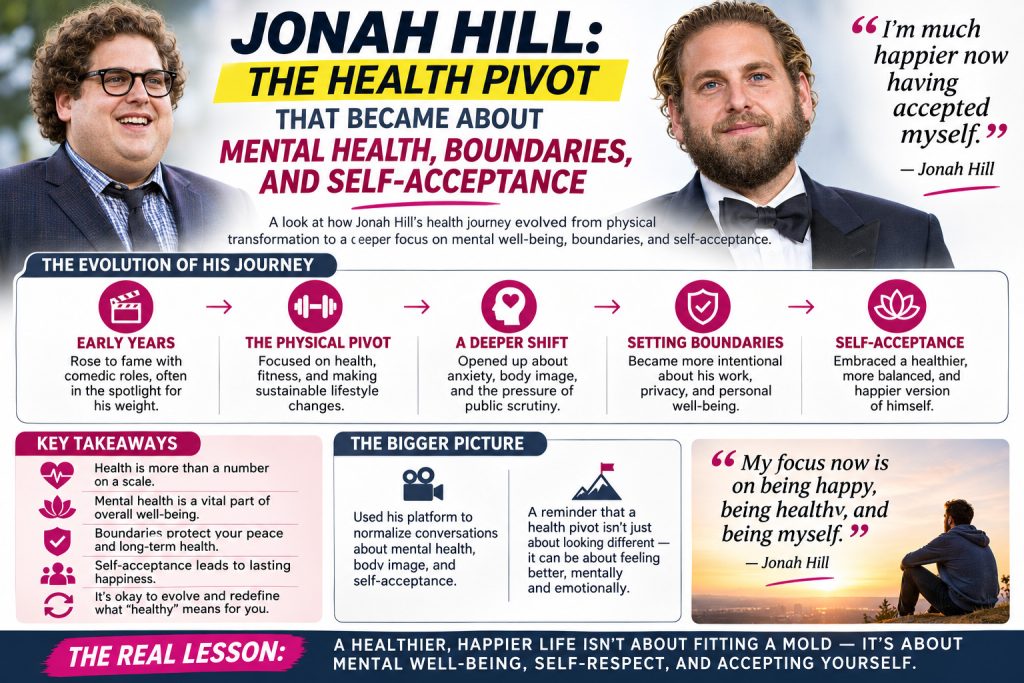
The story of Jonah Hill is one of the most relatable modern examples of a health pivot connected not just to physical change, but to emotional well-being, identity, anxiety, self-image, and mental health.
Today, many people recognize Jonah Hill from films like:
- Superbad
- Moneyball
- The Wolf of Wall Street
But behind the success, Hill spent years navigating intense public scrutiny surrounding:
- weight
- appearance
- confidence
- anxiety
- self-esteem
- public criticism
His story reflects one of the deepest themes in Permission to Pivot by Tom Ferrara:
sometimes the most important pivot is learning how to stop living primarily through the approval, judgment, or expectations of other people.
The Pressure of Public Identity
One of the most difficult aspects of Jonah Hill’s experience was that his appearance became part of his public identity.
The entertainment industry often treated his body as:
- a joke
- a character trait
- a media topic
- a public discussion point
This matters because many health pivots are emotionally connected to identity.
People begin feeling trapped inside:
- old labels
- public perception
- insecurity
- shame
- criticism
- comparison
Over time, this creates emotional exhaustion.
Many people eventually realize:
“I no longer want my self-worth controlled by how others see me.”
That realization often becomes the beginning of a deeper health pivot.
The Difference Between External Validation and Internal Alignment
One of the strongest ideas explored in Permission to Pivot by Tom Ferrara is learning to distinguish between:
- living for external validation
and - living in internal alignment
This distinction matters enormously in health transformations.
People often chase:
- weight loss
- appearance goals
- fitness trends
- public approval
while still feeling emotionally disconnected internally.
Real health pivots often involve:
- emotional healing
- self-respect
- mental peace
- boundaries
- confidence
- healthier relationships with self-image
Jonah Hill repeatedly emphasized that his evolution became increasingly connected to mental and emotional well-being, not simply appearance.
Health Pivots Are Often Mental Health Pivots
One reason Hill’s story resonates with so many people is because it reflects a modern reality:
physical health and mental health are deeply connected.
People frequently attempt to change:
- eating habits
- exercise routines
- appearance
without addressing:
- anxiety
- insecurity
- emotional stress
- self-criticism
- shame
- unhealthy coping patterns
But sustainable transformation usually requires addressing both sides together.
This is why many pivots fail when they focus only on surface behavior without deeper emotional awareness.
The Emotional Weight of Judgment
Living under constant public commentary can create enormous psychological pressure.
Hill openly discussed struggling with:
- confidence
- anxiety
- media criticism
- body-image pressure
This is important because many people delay health pivots not because they do not want change, but because they fear:
- judgment
- failure
- inconsistency
- embarrassment
- public attention
- criticism no matter what they do
One of the hardest truths about transformation is that people often judge both:
- who you were
and - who you are becoming
That reality keeps many people emotionally stuck.
The Pivot Toward Boundaries
One of the most powerful parts of Jonah Hill’s evolution involved boundaries.
Over time, he became increasingly vocal about:
- protecting mental health
- reducing media exposure
- limiting unhealthy public scrutiny
- prioritizing emotional well-being over constant public performance
This matters because many health pivots are not just about changing habits.
They are about changing environments, relationships, and expectations that damage emotional health.
Healthy pivots sometimes require:
- saying no
- reducing exposure to negativity
- protecting peace
- redefining success
- prioritizing emotional stability
The Difference Between Shame and Self-Respect
One of the biggest misconceptions about health change is the belief that shame creates sustainable transformation.
But long-term pivots rarely succeed through self-hatred.
Healthy transformation usually grows through:
- self-awareness
- compassion
- honesty
- discipline rooted in care
- emotional healing
- self-respect
This distinction matters enormously.
People who constantly attack themselves often struggle to sustain meaningful change because shame creates emotional exhaustion.
Hill’s story resonated because it increasingly became about:
- self-acceptance
- emotional growth
- confidence
- peace
- authenticity
rather than simply trying to satisfy public expectations.
Identity and Reinvention
Health pivots are deeply emotional because they challenge identity.
People begin asking:
- Who am I without these insecurities?
- Am I allowed to evolve?
- What if people dislike the new version of me?
- What if I stop defining myself through others’ opinions?
- What if my emotional health matters more than approval?
These are difficult questions.
But they often become the beginning of real transformation.
The Difference Between Discomfort and Misalignment
One of the strongest themes in Permission to Pivot by Tom Ferrara is recognizing the difference between:
- healthy growth discomfort
and - deeper emotional misalignment
This applies strongly to health.
Not all discomfort is bad.
Sometimes:
- growth feels uncomfortable
- boundaries feel unfamiliar
- healing feels vulnerable
- discipline requires effort
But other times, emotional exhaustion signals that:
- current habits are unsustainable
- self-image has become unhealthy
- approval-seeking is damaging
- mental health needs attention
Recognizing that difference changes everything.
Lessons People Can Learn From Jonah Hill’s Story
- Health Is Emotional Too
Mental health and physical health are deeply connected.
- Public Approval Is Unstable
Basing self-worth on others’ opinions creates emotional exhaustion.
- Boundaries Matter
Protecting emotional health is part of overall wellness.
- Self-Respect Creates Better Change Than Shame
Lasting transformation rarely grows from self-hatred.
- Reinvention Includes Identity
Health pivots often require redefining how you see yourself.
The “What If?” Question
Almost every meaningful health pivot eventually begins with:
“What if?”
What if I stopped defining myself through criticism?
What if my peace mattered too?
What if I deserve emotional stability?
What if health is bigger than appearance?
What if I can evolve without apologizing for it?
Fear usually follows immediately afterward.
Fear of:
- judgment
- vulnerability
- inconsistency
- criticism
- rejection
- change
But clarity rarely comes through continued avoidance.
Permission to Pivot
Many people already know when something feels emotionally unsustainable.
The harder part is deciding:
- whether the issue is temporary
- whether habits need to change
- whether emotional healing is overdue
- or whether a deeper pivot is trying to emerge
That is why Permission to Pivot by Tom Ferrara resonates far beyond careers alone.
Its themes apply powerfully to health because health pivots often involve:
- identity
- boundaries
- emotional honesty
- self-worth
- resilience
- reinvention
The book encourages people to ask:
- Am I living for approval or alignment?
- What habits are shaping my emotional health?
- What version of myself am I becoming?
- Am I protecting my peace or sacrificing it?
- What if taking care of myself matters more than public validation?
Jonah Hill’s story reminds us that some of the most important health pivots are not about changing your body for other people.
They are about finally learning how to protect your mind, your peace, and your relationship with yourself.
And sometimes the most meaningful transformation begins when you stop trying to earn worthiness from the outside world.
Recent Posts