Some pivots begin with dissatisfaction.
Others begin with curiosity.
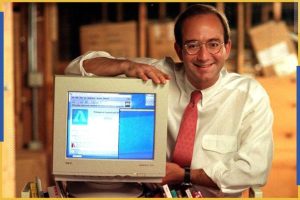
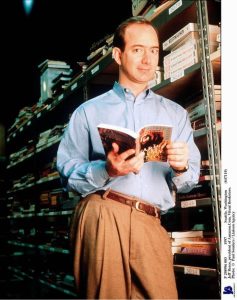

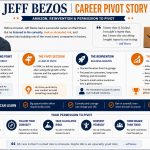
The story of Jeff Bezos is one of the most powerful examples of leaving a safe, prestigious career to pursue an uncertain idea that almost nobody fully understood at the time.
Today, Amazon feels permanent.
It dominates global commerce, cloud computing, logistics, entertainment, and technology infrastructure.
But when Bezos first considered launching an online bookstore in the mid-1990s, many people viewed the internet as experimental and unstable.
The idea of quitting a highly successful Wall Street career to sell books online sounded irrational to many professionals.
Yet that pivot changed business history forever.
His story reflects a central idea in Permission to Pivot by Tom Ferrara:
sometimes the biggest risk is not making the leap. It is staying in a life that no longer matches the future you can already see forming.
The Safe Career Path
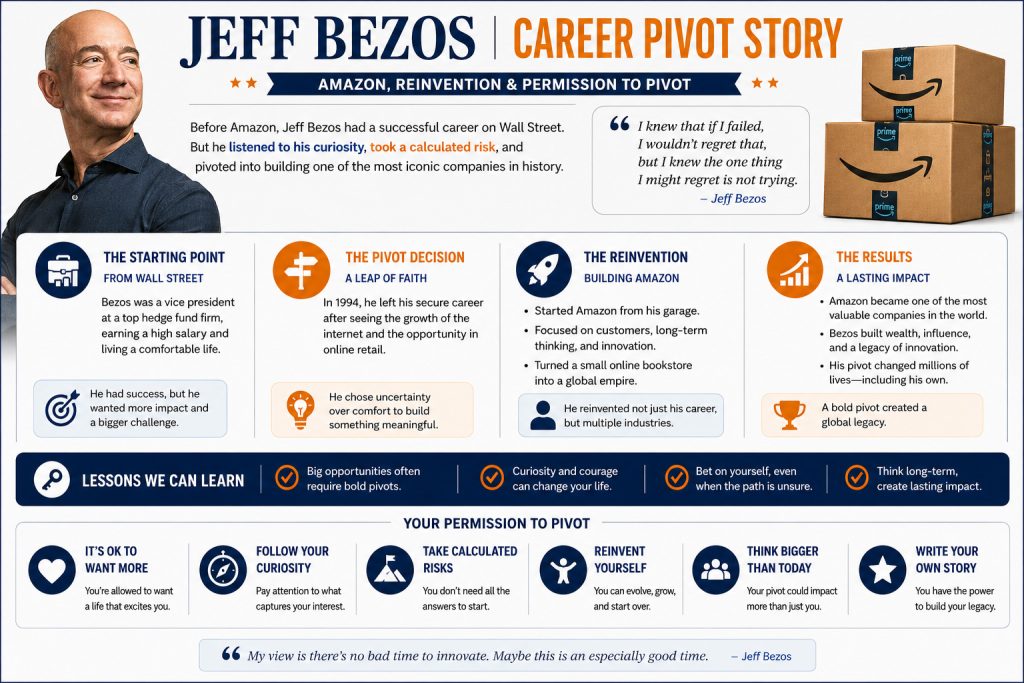
Before Amazon, Jeff Bezos worked in finance and technology on Wall Street.
He eventually became a senior vice president at the hedge fund D. E. Shaw, one of the most respected firms in the financial world.
From the outside, Bezos had everything many professionals chase:
- prestige
- income
- stability
- career momentum
- intellectual challenge
- future opportunity
For most people, reaching this level becomes the destination.
But internally, Bezos became increasingly fascinated with one thing:
the explosive growth of the internet.
At the time, internet usage was growing at an astonishing rate.
Most people still did not understand its long-term implications.
Bezos did.
And once he saw it, he could not stop thinking about it.
The “What If?” Moment
Career pivots often begin quietly.
Not with dramatic announcements.
Not with certainty.
But with recurring thoughts.
For Bezos, the question became:
“What if the internet changes everything?”
That question led him to begin researching online business opportunities.
He created a list of products that could potentially be sold online and eventually landed on books because:
- there were millions of titles
- inventory could scale digitally
- physical bookstores had limited shelf space
- demand already existed
At the time, this was far from obvious.
Remember, Amazon started as an online bookstore before becoming one of the largest companies in history.
That matters because pivots rarely begin looking enormous.
They usually begin looking small, uncertain, and difficult to explain.
Leaving Security
One of the defining moments in Bezos’ story came when he decided to leave Wall Street.
This was not a reckless decision.
In fact, Bezos later described using what he called a “regret minimization framework.”
He asked himself:
When I am 80 years old, what decision will I regret more?
Would he regret:
- leaving a prestigious career to try building something uncertain?
or - never attempting it at all?
That question changed everything.
This is one of the most powerful lessons in career pivots:
sometimes clarity comes less from predicting success and more from identifying future regret.
Many professionals stay stuck because they only evaluate:
- immediate risk
- short-term comfort
- current stability
Few stop to evaluate:
- long-term regret
- lost possibility
- ignored curiosity
- unrealized potential
The Pivot Into Uncertainty
Bezos left his Wall Street career and moved to Seattle to launch Amazon from a garage.
Today, garage startup stories feel romanticized.
In reality, they are usually emotionally exhausting.
At the beginning:
- resources are limited
- outcomes are uncertain
- people doubt you
- stress is constant
- identity feels unstable
- failure feels possible every day
This is where many people retreat back toward familiarity.
But Bezos continued moving forward.
Not because success was guaranteed.
Because he believed the opportunity was worth pursuing.
That distinction matters.
Healthy pivots are not impulsive emotional escapes.
They are intentional movements toward possibility despite uncertainty.
The Difference Between Fear and Misalignment
One of the key ideas in Permission to Pivot by Tom Ferrara is learning to distinguish between:
- fear that accompanies growth
and - deeper misalignment
This distinction matters enormously.
Not every difficult feeling means you are on the wrong path.
Sometimes:
- you are learning
- you are early in the process
- you are confronting uncertainty
- you are building something meaningful
Other times, persistent dissatisfaction signals that your current environment no longer aligns with your vision or identity.
Bezos likely experienced both.
Leaving Wall Street certainly involved fear.
But underneath that fear was also a deeper realization:
his current path no longer matched the future he believed was emerging.
That is a very different signal from temporary discomfort.
Building Before Validation
One of the hardest parts of career pivots is that external validation usually arrives late.
At the beginning, people often misunderstand the vision.
Many early critics believed:
- people would never buy books online
- consumers would not trust internet payments
- traditional retail would dominate forever
- Amazon would remain niche
But Bezos focused obsessively on long-term thinking.
This became one of his defining strengths.
He repeatedly prioritized:
- customer experience
- innovation
- scale
- infrastructure
- experimentation
- future positioning
That mindset allowed Amazon to expand far beyond books into:
- retail
- logistics
- streaming
- smart devices
- AI
- cloud computing through Amazon Web Services
Again, none of this was obvious at the beginning.
That is important because pivots rarely come with guaranteed visibility.
Most meaningful reinventions require moving before the outcome is fully proven.
Career Pivots Are Often Vision Pivots
Many people think career pivots are mostly about escaping dissatisfaction.
But often they are about moving toward a larger vision of what is possible.
Bezos did not leave Wall Street because finance was inherently bad.
He left because something else captured his imagination more powerfully.
This is an important distinction.
Some pivots are driven by pain.
Others are driven by possibility.
The challenge is learning how to recognize which force is driving you.
The Emotional Side of Reinvention
From the outside, Bezos’ story looks strategic and analytical.
But emotionally, it still involved:
- uncertainty
- fear
- identity risk
- pressure
- doubt
- public skepticism
Career pivots always involve emotional disruption because they challenge certainty.
Questions appear:
- What if I fail?
- What if people think I am reckless?
- What if I lose everything?
- What if I regret leaving?
- What if the vision is wrong?
These fears stop many professionals long before they ever explore what is possible.
Lessons Professionals Can Learn From Jeff Bezos
- Curiosity Deserves Attention
Repeated fascination with an idea, industry, or opportunity may be signaling something important.
- Long-Term Thinking Changes Decisions
Bezos evaluated future regret, not just immediate comfort.
That perspective changes career decisions dramatically.
- Small Pivots Can Become Massive Transformations
Amazon began as an online bookstore.
Never underestimate the long-term potential of a small beginning.
- Validation Usually Comes Later
Many strong pivots look questionable in the early stages.
External approval is often delayed.
- Stability Can Become a Trap
A good career is not always the same thing as the right career.
Permission to Pivot
Many professionals already sense when something larger keeps pulling at them.
The harder part is deciding whether the feeling represents:
- meaningful opportunity
- temporary distraction
- growth discomfort
- fear
- burnout
- or genuine long-term misalignment
That is why Permission to Pivot by Tom Ferrara resonates with people navigating uncertainty, reinvention, and career change.
The book does not encourage reckless decisions.
Instead, it encourages better questions:
- What keeps returning to my mind repeatedly?
- Am I afraid, or am I out of alignment?
- What future possibility am I trying to ignore?
- Would I regret never exploring this?
- Am I staying because it fits, or because it feels safe?
Jeff Bezos’ story reminds us that some of the biggest career pivots in history began with a simple but uncomfortable realization:
the future you want may require leaving the version of success that already exists.
And sometimes the most important career decision is not whether the path is guaranteed.
It is whether the possibility matters enough to explore anyway.
Recent Posts