The Power of the Pivot: How Bold Moves Create Breakthroughs and Hesitation Destroys Them
By Tom Ferrara
There’s a moment that defines every company’s future.
It doesn’t happen when they raise capital.
It doesn’t happen when they launch.
It doesn’t even happen when they scale.
It happens in a far more subtle and far more dangerous moment:
When reality changes… and the company must decide whether to change with it.
That moment is the pivot point.
And how a company responds in that moment determines everything:
- Whether it becomes iconic
- Whether it stagnates
- Or whether it disappears
This is the essence of Permission to Pivot—not just for individuals, but for businesses, leaders, and entire industries.
Today, I want to walk you through two powerful real-world stories:
- One company that recognized the moment, pivoted boldly, and changed the world
- Another that saw the shift, hesitated due to sunk costs, and paid the ultimate price
Because the lesson is simple, but unforgiving:
You either evolve… or you get replaced.
The Pivot That Changed Everything: Netflix
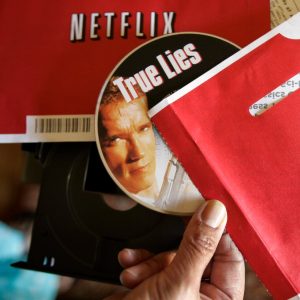
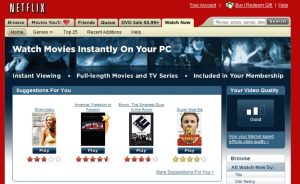
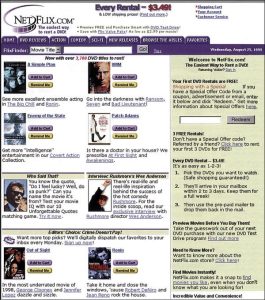
Let’s talk about Netflix, a company that didn’t just pivot once… it pivoted multiple times, each time redefining its future.
Phase 1: The Original Model
Netflix started in 1997 as a DVD-by-mail rental service.
At the time, this was already a disruption. It challenged late fees, physical stores, and the dominance of Blockbuster.
But here’s what made Netflix different from the beginning:
They weren’t married to the model they were committed to the outcome.
The outcome was simple:
Make entertainment more accessible and convenient.
The DVD model was just the vehicle.
The “Notice” Moment
As internet speeds improved in the early 2000s, something became clear:
Streaming video would eventually replace physical media.
Now here’s the key:
- This shift wasn’t immediate.
- It wasn’t obvious to everyone.
- And it wasn’t risk-free.
In fact, pivoting too early could have destroyed the business.
But ignoring it?
That would have been fatal.
The “Decide” Moment
Netflix made a decision that most companies would have avoided:
They chose to disrupt themselves.
Think about that.
They had:
- A profitable DVD business
- A growing subscriber base
- Strong market position
And they chose to invest heavily in something that would:
- Cannibalize their own revenue
- Require new infrastructure
- Create short-term uncertainty
This is where most companies fail.
They say:
- “Let’s wait until it’s clearer”
- “Let’s protect what we’ve built”
- “Let’s not risk the current revenue”
Netflix said the opposite:
“If we don’t disrupt ourselves, someone else will.”
The “Move” Phase
They launched streaming.
At first, it was limited.
Not everything was available.
The experience wasn’t perfect.
But it didn’t need to be.
Because they weren’t chasing perfection.
They were chasing direction.
They knew:
- Where the world was going
- What customers would eventually want
- And how behavior would evolve
So they moved early—and kept improving.
The Second Pivot (Most People Miss This)
Then they did something even more radical:
They pivoted again.
From distributor to creator.
Instead of relying solely on licensed content, Netflix began producing original shows.
This led to:
- House of Cards
- Stranger Things
- A completely new competitive moat
They went from:
“Platform”
to
“Powerhouse content studio + platform”
The Result
Today, Netflix isn’t just a streaming company.
It’s a global entertainment leader that:
- Changed how the world consumes media
- Destroyed legacy distribution models
- Created entirely new viewing habits
And it all came down to one principle:
They didn’t wait for certainty. They moved with conviction.
NOW LETS LOOK AT A FLIPSIDE EXAMPLE…
The Cost of Waiting: Kodak


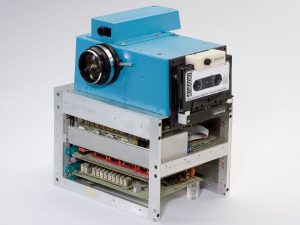
Now let’s look at the other side of the coin.
The company that had the opportunity…
Saw the future…
And still missed it.
Kodak.
The Irony (This Is Important)
Kodak actually invented the digital camera in 1975.
Let that sink in.
They saw the future before almost anyone else.
But they didn’t act on it.
Why?
The Sunk Cost Trap
Kodak’s entire business was built on:
- Film
- Chemical processing
- Physical photo development
This wasn’t just a product line—it was an empire.
Factories.
Supply chains.
Distribution channels.
Massive revenue streams.
Digital photography threatened all of it.
And here’s where the trap was set:
They had too much invested in the old model.
So instead of pivoting, they rationalized:
- “Digital isn’t ready yet”
- “Consumers still prefer film”
- “Let’s protect our core business”
The “Notice” Without Action
Kodak noticed the shift.
They weren’t blind.
They had the technology.
They had the talent.
They had the brand.
What they didn’t have…
…was the willingness to let go.
The Failure to Decide
This is where companies fail:
Not in noticing.
But in deciding.
Kodak hesitated.
They tried to:
- Slowly adapt
- Protect existing revenue
- Delay the inevitable
But markets don’t wait.
Technology doesn’t pause.
Consumer behavior doesn’t ask permission.
The Cost of Delay
By the time Kodak fully committed to digital:
- Competitors had taken the lead
- Consumer behavior had already shifted
- Their advantage was gone
What could have been dominance…
…became irrelevance.
The Result
In 2012, Kodak filed for bankruptcy.
A company that once dominated an entire industry…
…was undone not by lack of innovation—
but by lack of decisive action.
The Real Lesson (This Applies to You, Too)
These stories aren’t just about Netflix and Kodak.
They’re about a universal pattern.
Every company.
Every leader.
Every individual.
Faces this moment.
The Pivot Framework in Action
Let’s break it down through the Permission to Pivot lens:
- Notice
Netflix:
- Saw streaming coming
Kodak:
- Also saw digital coming
Both noticed.
- Decide
Netflix:
- Chose to disrupt themselves
Kodak:
- Chose to protect what they had
This is where the paths diverged.
- Move
Netflix:
- Acted early and iterated
Kodak:
- Delayed and hesitated
- Sustain
Netflix:
- Continued evolving (content creation)
Kodak:
- Tried to catch up too late
The Sunk Cost Lie
Here’s the truth most people don’t want to hear:
The past does not justify the future.
Just because you’ve invested:
- Time
- Money
- Energy
- Identity
…does NOT mean you should keep going.
In fact, the more you’ve invested
the harder it is to pivot
and the more dangerous it becomes not to
The Hard Truth
Most companies don’t fail because they made the wrong decision.
They fail because:
They held onto the right decision… for too long.
What This Means for You (and Your Business)
Right now, whether you realize it or not, you are somewhere in this cycle.
Ask yourself:
- What am I holding onto because I’ve already invested in it?
- What do I know is changing, but haven’t acted on yet?
- Where am I waiting for certainty instead of moving with direction?
Because here’s the reality:
The longer you wait, the more expensive the pivot becomes.
Final Thought: Permission Isn’t Given, It’s Taken
Netflix didn’t wait for permission.
They didn’t wait for:
- perfect timing
- full clarity
- guaranteed success
They moved because they understood something most don’t:
The risk of staying the same is greater than the risk of changing.
Kodak, on the other hand, waited.
They protected.
They hesitated.
And in doing so—
they lost the very future they had the power to create.
The Question That Changes Everything
So I’ll leave you with this:
Where in your life or business are you choosing comfort over evolution?
Because the next chapter
The better chapter
The one that changes everything
Doesn’t come from holding on.
It comes from having the courage to pivot.
Recent Posts